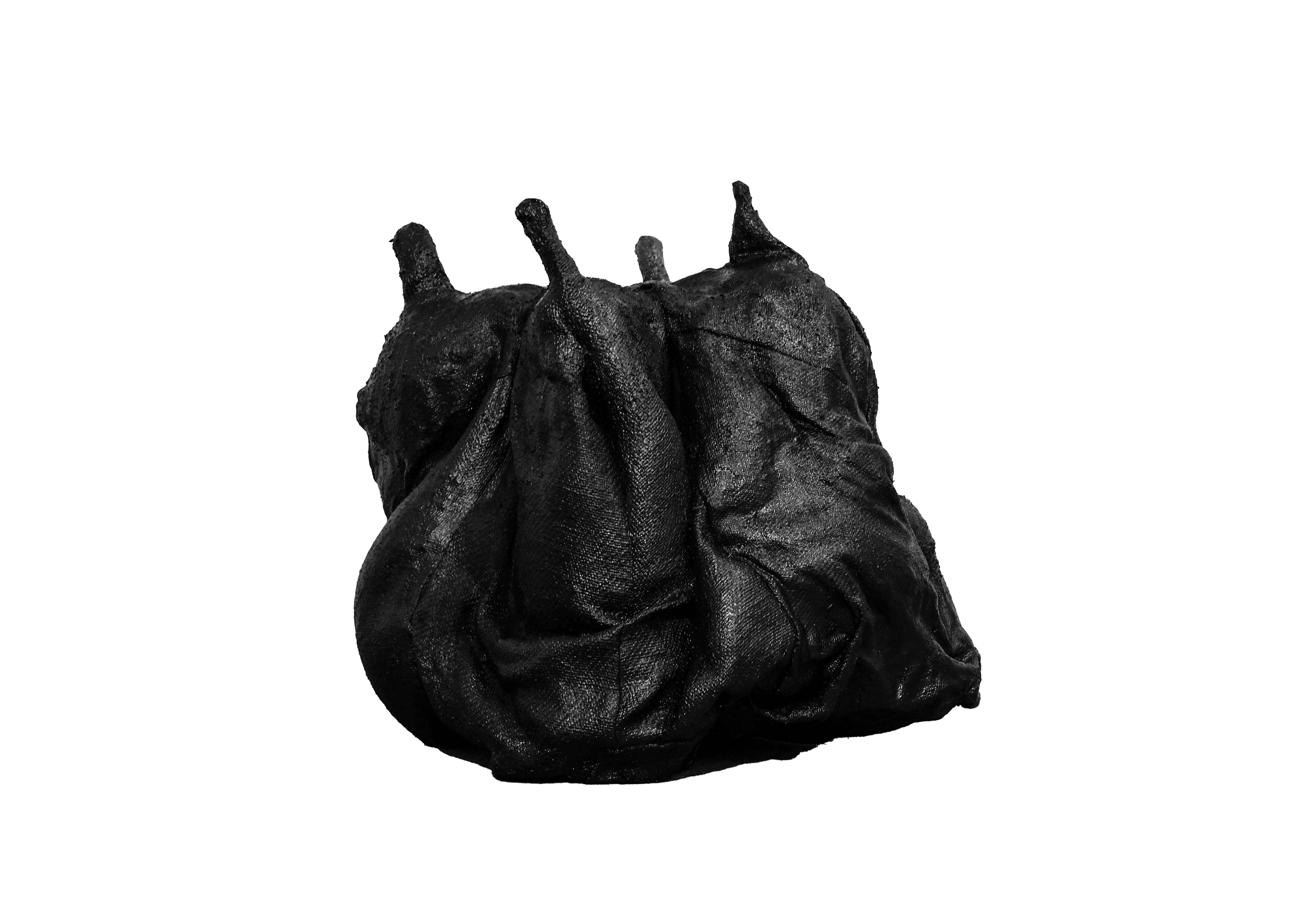
The sculpture MOE reflects a shift in how intimacy is understood in urban life compared with traditional village contexts. In villages, physical intimacy is often tied to social structures and relationships; in cities, sex and nudity can become more abstract and detached.
To express this abstraction, the work begins with a familiar rural symbol—the cow—and strips away its defining features. The form becomes a reduced sign rather than a literal representation, showing that meaning can persist even when the traditional image is altered.
Like the other works in the BUNNY BEHAVIOR series, the sculpture emerges from darkness. Its surface and silhouette blur depth, encouraging the viewer to move around it to understand its full shape.
The piece is made from jute, a material associated with potato sacks and rural labor. By using jute, the work carries the identity of the village within it while presenting it in a new context, emphasizing transformation—from village to city, from familiarity to abstraction.
“MOE” is both the Dutch phonetic spelling of a cow’s sound and the Dutch word for “tired.”
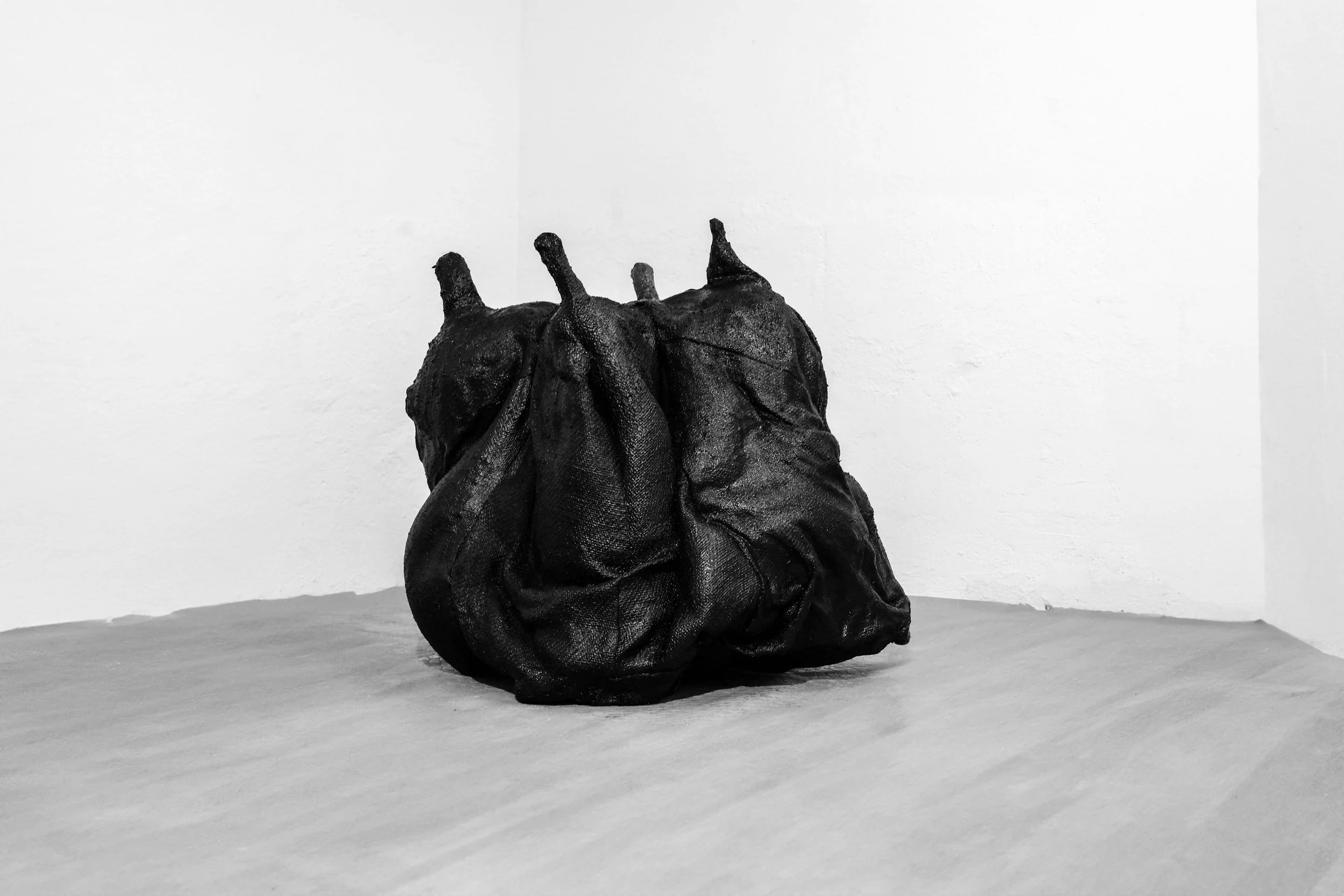
MOE Jute fabric and mixed media 120×120×84 cm 2026
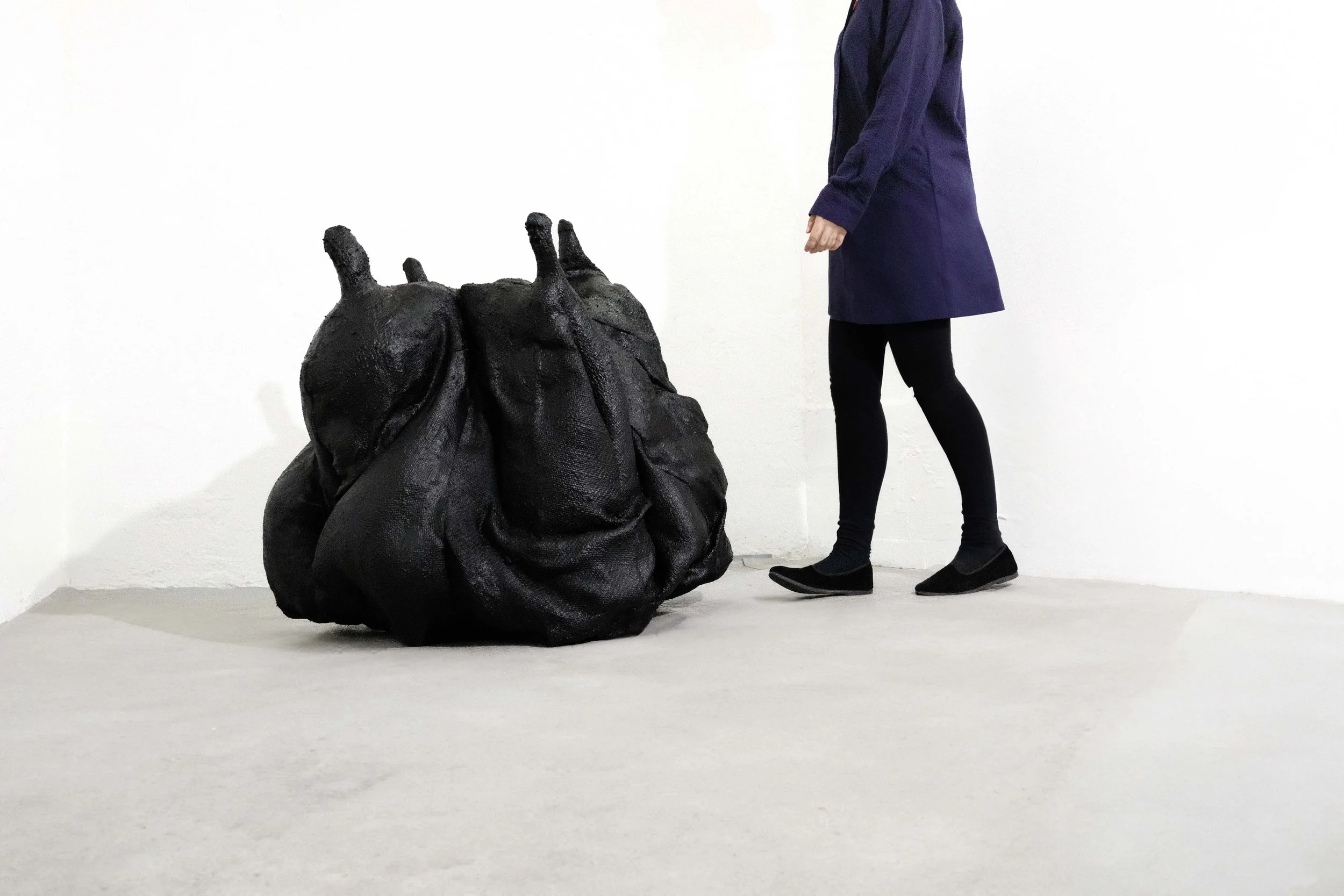
size MOE Jute fabric and mixed media 120×120×84 cm 2026
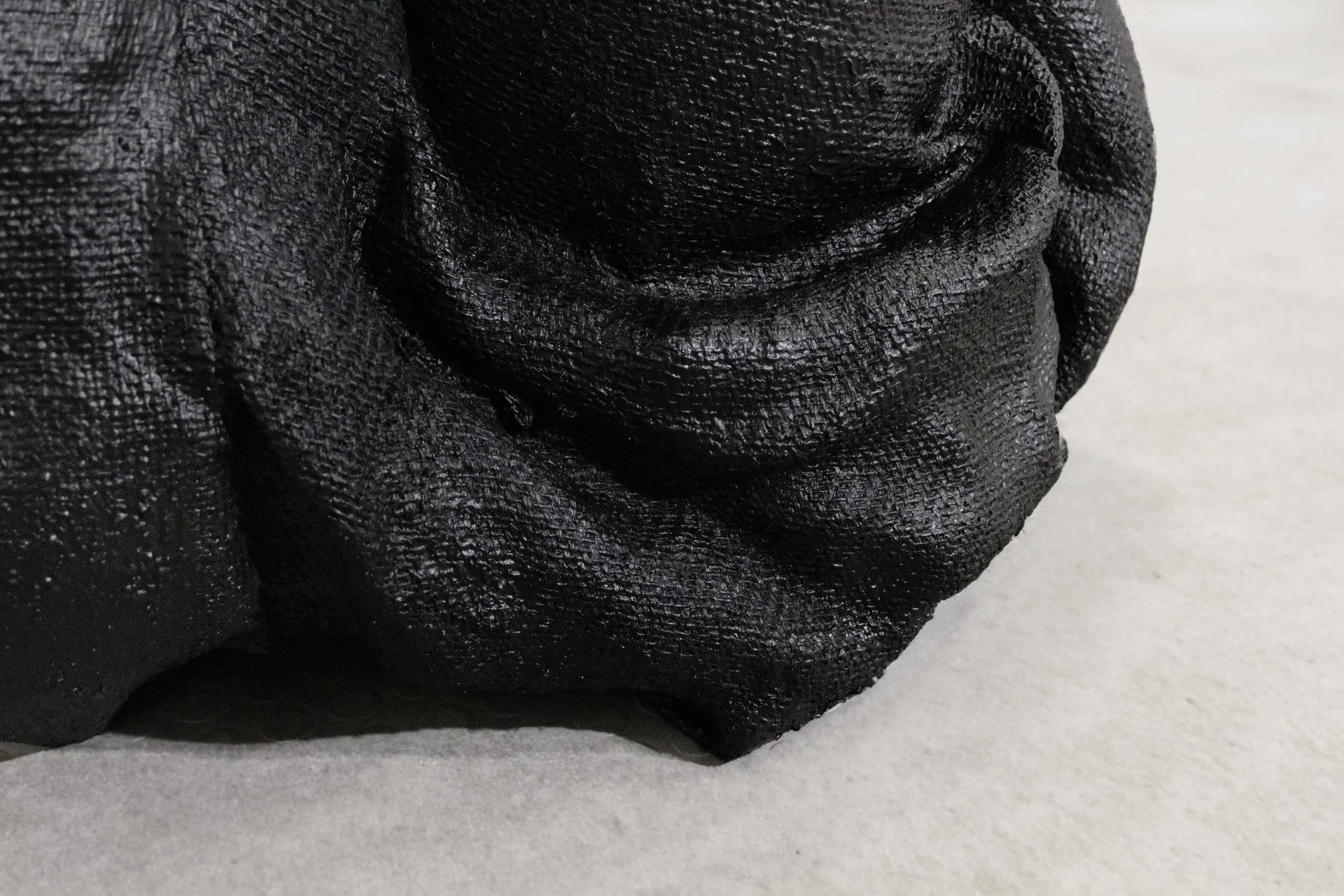
detail MOE Jute fabric and mixed media 120×120×84 cm 2026
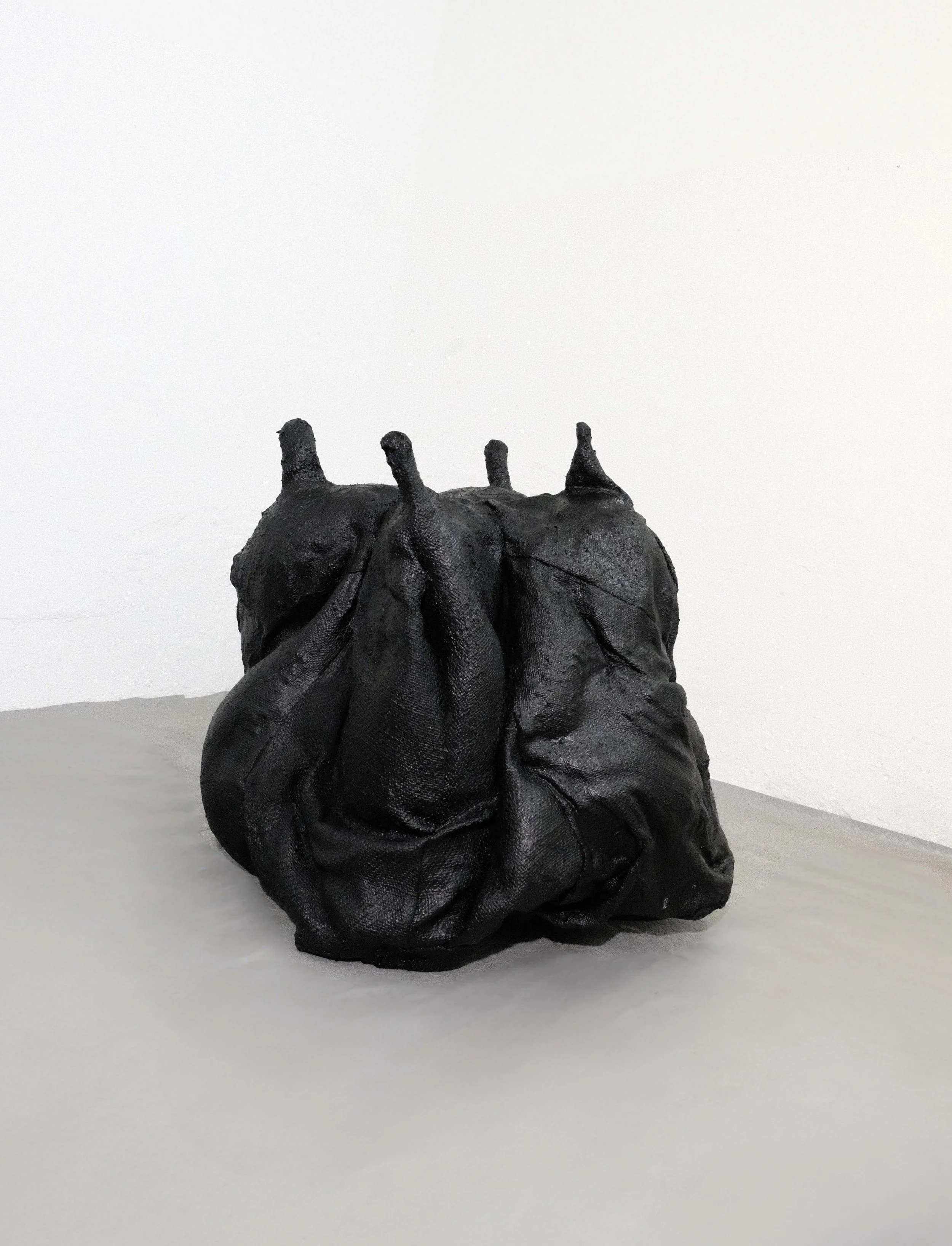
MOE Jute fabric and mixed media 120×120×84 cm 2026
Part of series: BB (BUNNY BEHAVIOR)